International
Word Processing Conference
WoProc 2024


Dear colleagues,
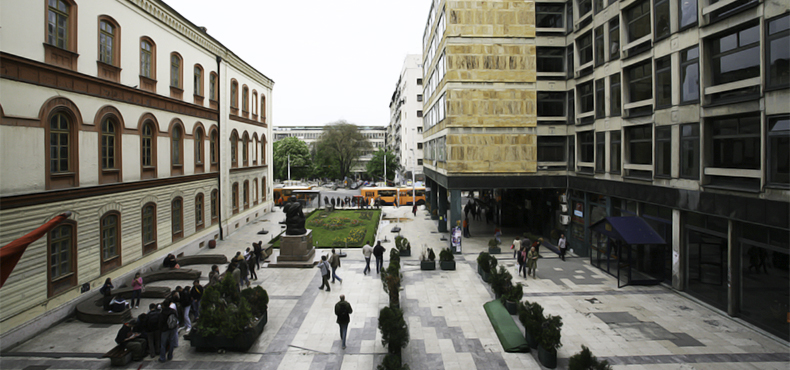
We invite you to the International Word Processing Conference – WoProc 2024, which continues the International Morphology Processing Conference – MoProc. This year, the conference is organised by the Laboratory for Experimental Psychology and the Faculty of Philosophy, at the University of Belgrade. After the pause due to the pandemic, the 12th conference will be held in person from July 4th to July 6th 2024 at the Faculty of Philosophy in Belgrade, Serbia.
Following the tradition, papers addressing topics in morphology processing will be presented. However, this year, we aim to broaden the scope of the conference, and hence invite papers researching all aspects of word processing! We, therefore, hope to invite discussions related to behavioural, computational, and neural aspects of both the production and comprehension of words. Traditionally, in addition to fruitful discussions, we hope to gather colleagues in a friendly atmosphere and create long-lasting memories!

Important dates
Abstract submissions open:
January 25th 2024
Abstract submissions close:March 15th 2024
New submission deadline:
April 5th
Notification of acceptance:
May 5th 2024 (no later than May 10th)
Registration opens (and a preliminary schedule will be available):
by May 15th 2024
Registration link:
https://infozonet.in.rs/WOPROC/registration.php
Registration fee:
80eur
After June 15th,
the registration will be possible
at the augmented fee of 100eur
(if you anticipate delays, but plan to register, to preserve the reduced fee please contact the conference team before June 15th)
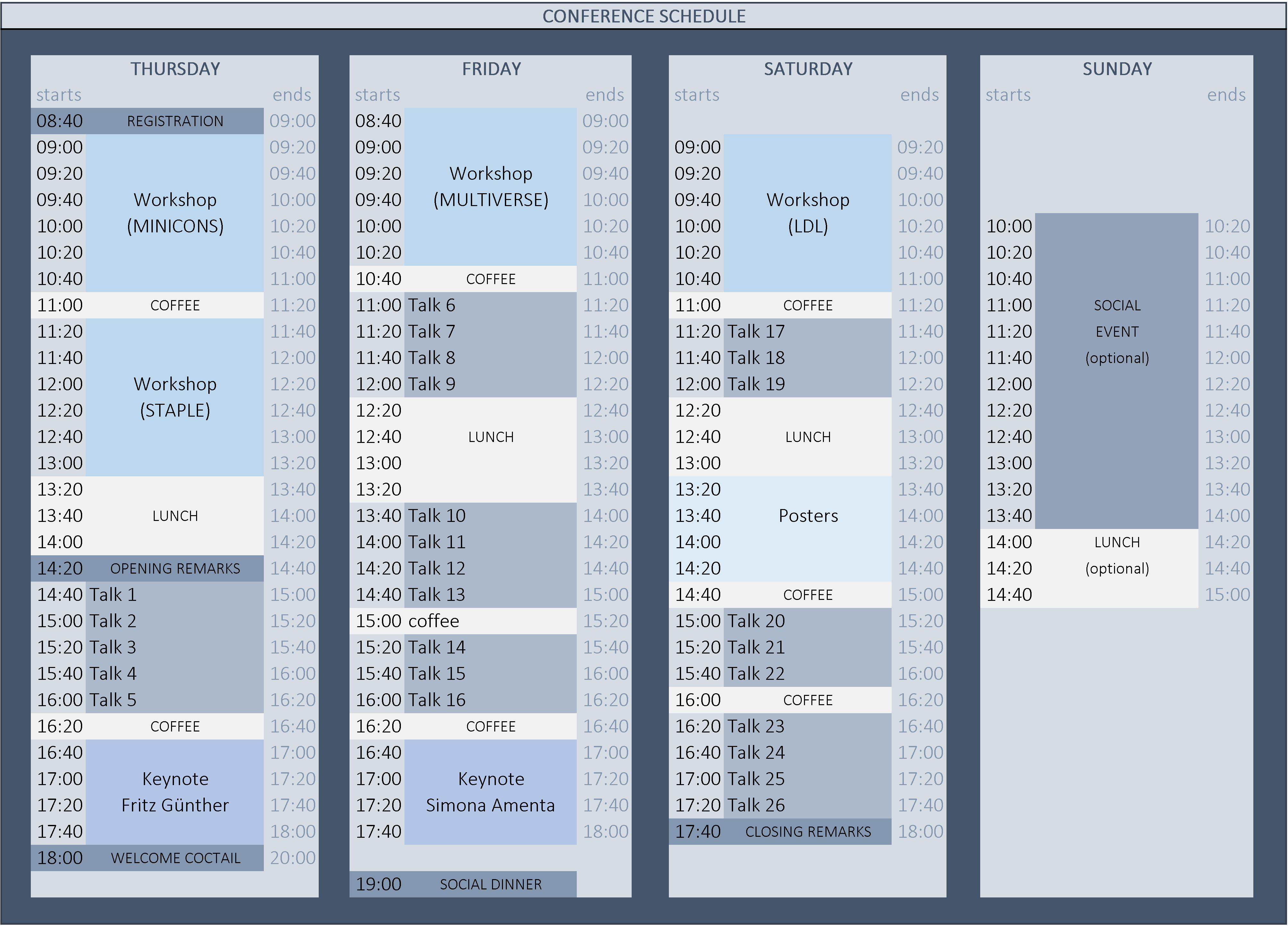
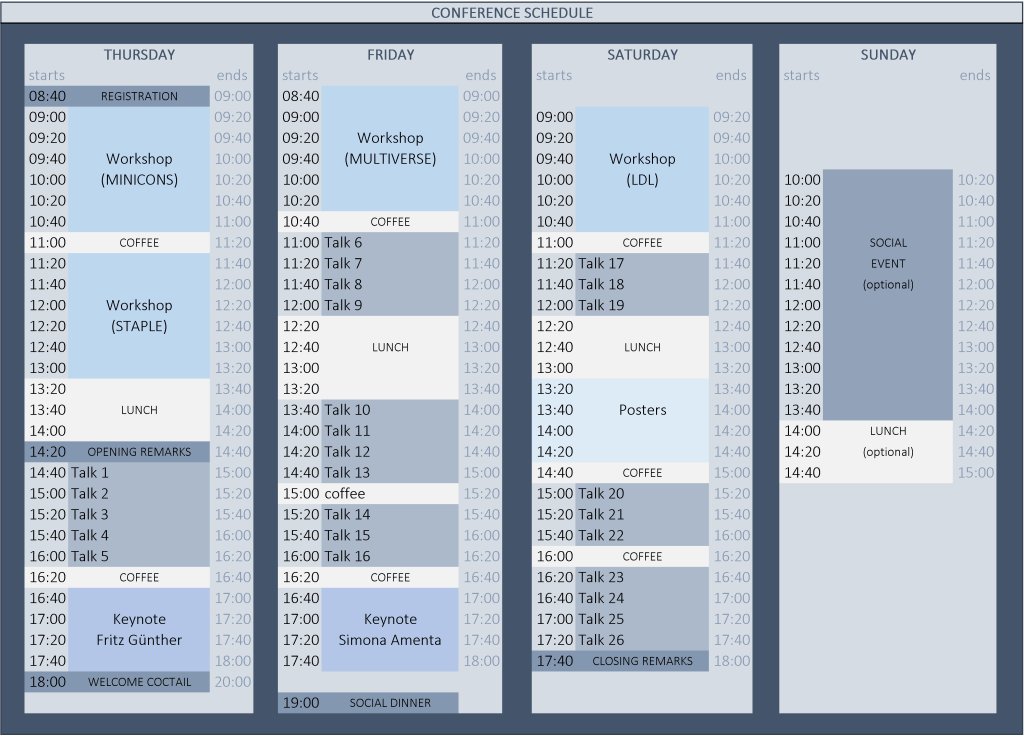
The preliminary programme
of the conference
will be available in early June 2024
Conference dates: July 4-6 2024
Venue
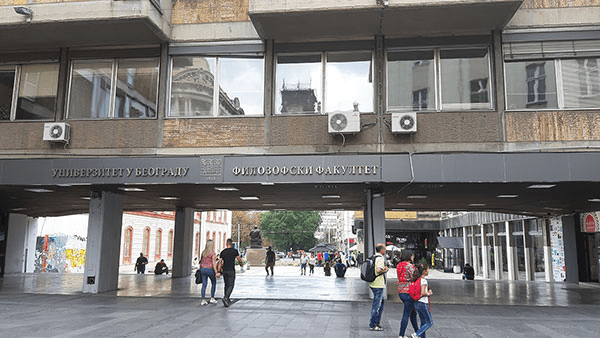
Faculty of Philosophy, University of Belgrade, Belgrade, Serbia
Location
Reaching the venue
Upon arriving in Belgrade, you can use multiple forms of public transport to reach the venue. For example, you can use bus lines 31, EKO2, minivan E2, and trolley lines 19, 21, 22, 29, 28, and 41. The name of the stop is Studentski trg. Also, you can reach nearby Republic Square (5 minutes walk) using bus lines 24, 26, 27, 37, 44, 95, or Zeleni Venac (10 minutes walk uphill) using bus lines 52, 53, 56, 83, 95).
PLEASE WEAR NAMETAGS
DURING ALL CONFERENCE EVENTS

Conference materials
Printing the poster
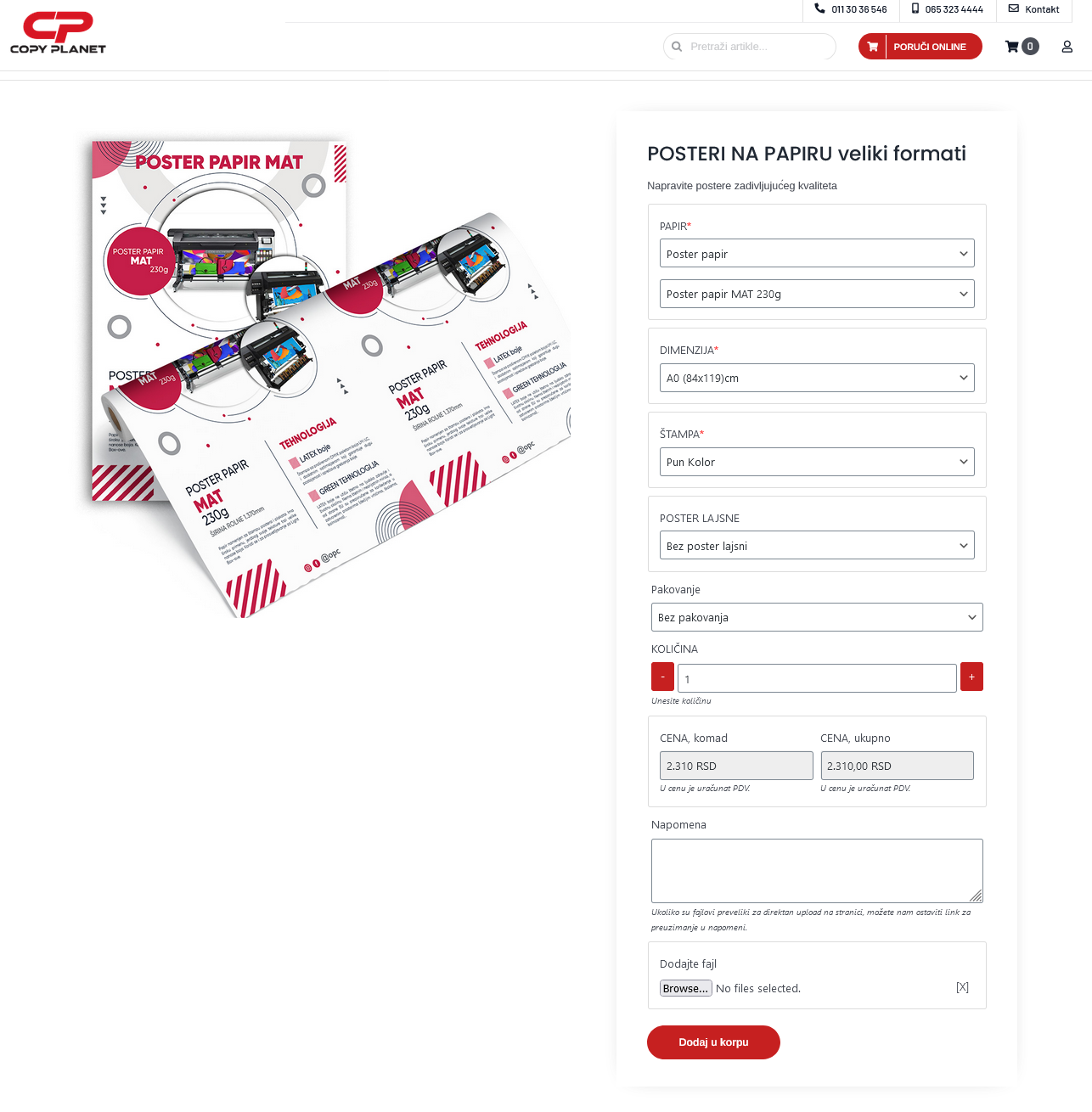
There are multiple places near the conference venue where the poster can be printed. We recommend printing it here (a 5-minute walk from the conference venue). The poster should be sent two days ahead using this form: https://copyplanet.rs/proizvod/posteri/
Here is the model of how to complete the form to order an A0 poster (~20eur).


Workshops
Linear Discriminative Learning
Harald Baayen & Maria Heitmeier
University of Tuebingen
Multiverse Analysis
Erin M. Buchanan
Harrisburg University
Minicons and LLMs
Marco Ciapparelli,
University of Milano-Bicocca
STAPLE: The project management scientific software
Erin M. Buchanan
Harrisburg University

Scientific Committee
Dušica Filipović Đurđević, chair
Harald Baayen
Melanie Bell
Raymond Bertram
Erin M. Buchanan
Davide Crepaldi
Dagmar Divjak
Dermot Lynott
Marco Marelli
Petar Milin
Ingo Plag
Maja Savić
Xenia Schmalz
Sascha Schroeder
João Veríssimo
Virve-Anneli Vihman
Chris Westbury

Abstract submission
Abstract submission is now closed

Organizing Committee
Dušica Filipović Đurđević
Maja Savić
Milica Popović Stijačić
Ksenija Mišić
Sara Anđelić
Friends of the conference



Conference events
Tour of the Collection of old scientific instruments
Predrag Nedimović,
Laboratory for Experimental Psychology, University of Belgrade
Registration form

Social events
Welcome cocktail
Thursday, 6-8 PM, Pub Crveni Petao
4 min walk from the venue
Social dinner
Friday, 7 PM, Restaurant Thyme
5 min walk from the venue
50 eur
Please fill in the questionnaire (no later than June 20th)
Social Sunday
A guided tour of Belgrade underneath the Belgrade
Registration form
Keynote
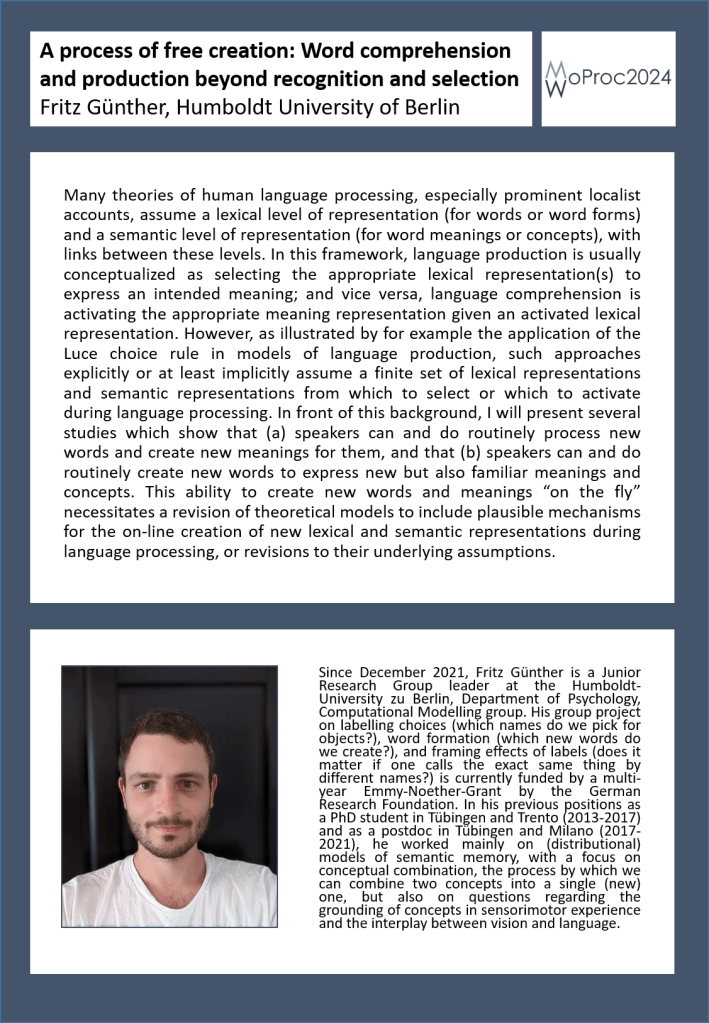
Fritz Günther
A process of free creation: Word comprehension and production beyond recognition and selection
Many theories of human language processing, especially prominent localist accounts, assume a lexical level of representation (for words or word forms) and a semantic level of representation (for word meanings or concepts), with links between these levels. In this framework, language production is usually conceptualized as selecting the appropriate lexical representation(s) to express an intended meaning; and vice versa, language comprehension is activating the appropriate meaning representation given an activated lexical representation. However, as illustrated by for example the application of the Luce choice rule in models of language production, such approaches explicitly or at least implicitly assume a finite set of lexical representations and semantic representations from which to select or which to activate during language processing. In front of this background, I will present several studies which show that (a) speakers can and do routinely process new words and create new meanings for them, and that (b) speakers can and do routinely create new words to express new but also familiar meanings and concepts. This ability to create new words and meanings “on the fly” necessitates a revision of theoretical models to include plausible mechanisms for the on-line creation of new lexical and semantic representations during language processing, or revisions to their underlying assumptions.

Since December 2021, Fritz Günther is a Junior Research Group leader at the Humboldt-University zu Berlin, Department of Psychology, Computational Modelling group. His group project on labelling choices (which names do we pick for objects?), word formation (which new words do we create?), and framing effects of labels (does it matter if one calls the exact same thing by different names?) is currently funded by a multi-year Emmy-Noether-Grant by the German Research Foundation. In his previous positions as a PhD student in Tübingen and Trento (2013-2017) and as a postdoc in Tübingen and Milano (2017-2021), he worked mainly on (distributional) models of semantic memory, with a focus on conceptual combination, the process by which we can combine two concepts into a single (new) one, but also on questions regarding the grounding of concepts in sensorimotor experience and the interplay between vision and language.
Keynote
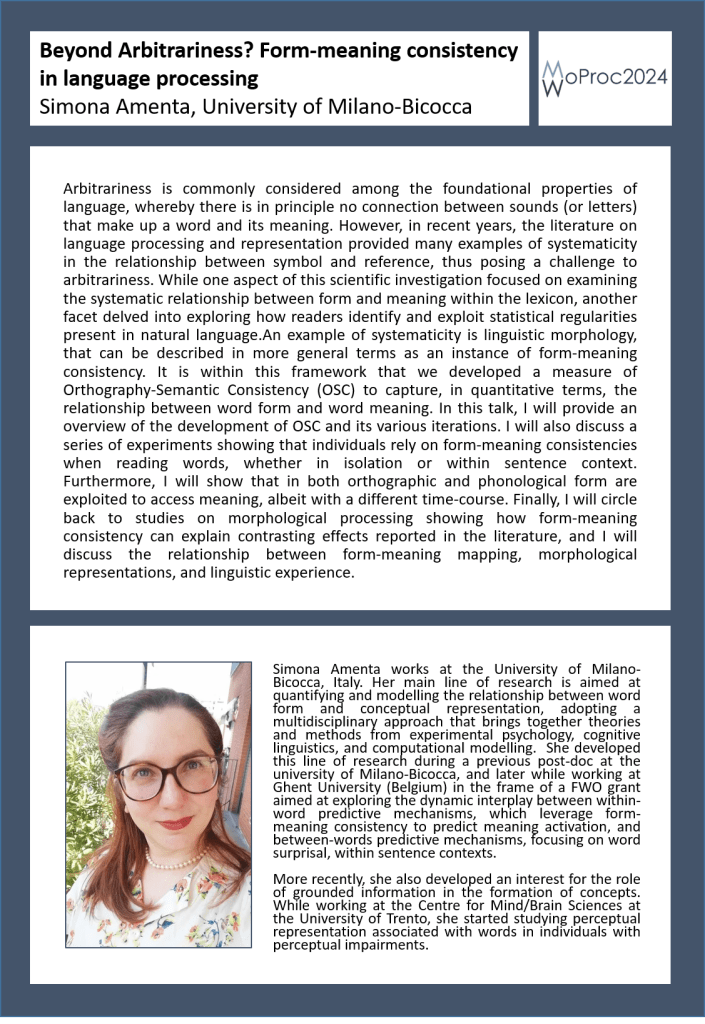
Simona Amenta
Beyond Arbitrariness? Form-meaning consistency in language processing
Arbitrariness is commonly considered among the foundational properties of language, whereby there is in principle no connection between sounds (or letters) that make up a word and its meaning. However, in recent years, the literature on language processing and representation provided many examples of systematicity in the relationship between symbol and reference, thus posing a challenge to arbitrariness. While one aspect of this scientific investigation focused on examining the systematic relationship between form and meaning within the lexicon, another facet delved into exploring how readers identify and exploit statistical regularities present in natural language.
An example of systematicity is linguistic morphology, that can be described in more general terms as an instance of form-meaning consistency. It is within this framework that we developed a measure of Orthography-Semantic Consistency (OSC) to capture, in quantitative terms, the relationship between word form and word meaning. In this talk, I will provide an overview of the development of OSC and its various iterations. I will also discuss a series of experiments showing that individuals rely on form-meaning consistencies when reading words, whether in isolation or within sentence context. Furthermore, I will show that in both orthographic and phonological form are exploited to access meaning, albeit with a different time-course. Finally, I will circle back to studies on morphological processing showing how form-meaning consistency can explain contrasting effects reported in the literature, and I will discuss the relationship between form-meaning mapping, morphological representations, and linguistic experience.
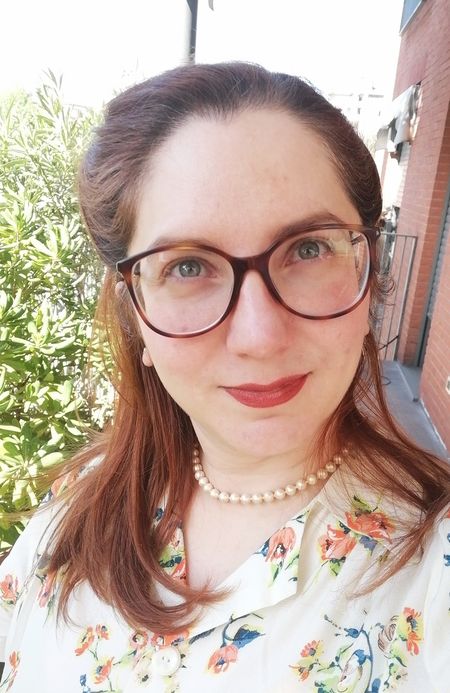
Simona Amenta works at the University of Milano-Bicocca, Italy. Her main line of research is aimed at quantifying and modelling the relationship between word form and conceptual representation, adopting a multidisciplinary approach that brings together theories and methods from experimental psychology, cognitive linguistics, and computational modelling. She developed this line of research during a previous post-doc at the university of Milano-Bicocca, and later while working at Ghent University (Belgium) in the frame of a FWO grant aimed at exploring the dynamic interplay between within-word predictive mechanisms, which leverage form-meaning consistency to predict meaning activation, and between-words predictive mechanisms, focusing on word surprisal, within sentence contexts.
More recently, she also developed an interest for the role of grounded information in the formation of concepts. While working at the Centre for Mind/Brain Sciences at the University of Trento, she started studying perceptual representation associated with words in individuals with perceptual impairments.
 WoProc 2024